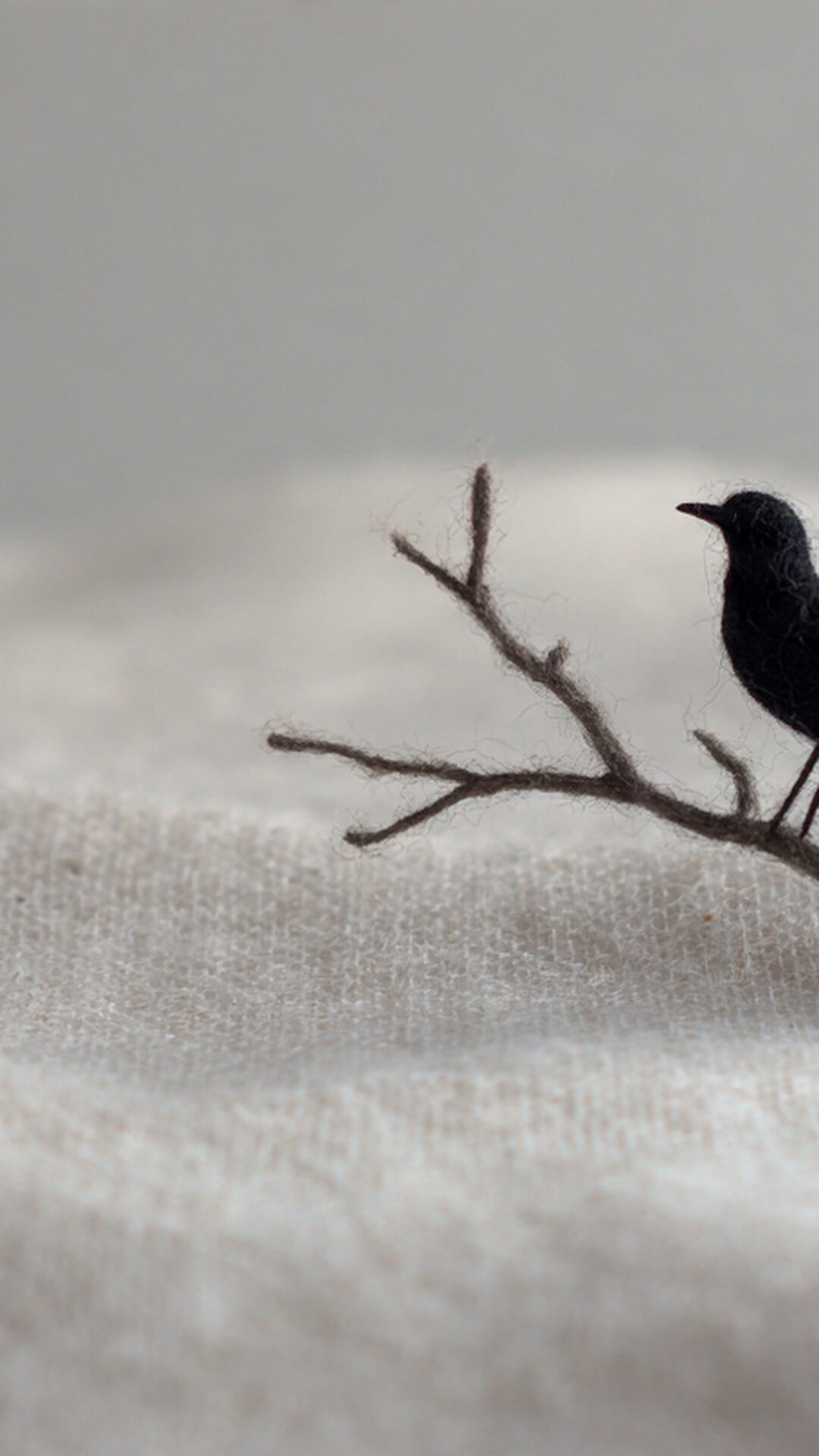
★ Marquee entry — extended editorial essay
Listen on Spotify
Spotify's official recording from The Beatles (Remastered). Sign-in Spotify users get full playback; everyone else gets a 30-second preview. Open in Spotify →
Overview
"Blackbird" is a song by the English rock band the Beatles from their 1968 double album The Beatles. It was written by Paul McCartney and credited to Lennon–McCartney, and performed as a solo piece by McCartney. When discussing the song, McCartney has said that the lyrics were inspired by hearing the call of a blackbird in Rishikesh, India, and by the civil rights movement in the Southern United States. [Wikipedia]
Background
Written by McCartney during the band's stay at the Maharishi's ashram in Rishikesh in spring 1968. Inspired by Bach's Bourrée in E minor (which McCartney had learned as a teenager) and intended as a metaphor for the American Civil Rights movement — 'blackbird' meaning a Black woman in segregated America. McCartney has confirmed this reading in interviews from the 1990s onwards. Paul McCartney composed and performed Blackbird entirely solo on 11 June 1968 while George Harrison and Ringo Starr were in the USA. This intimate acoustic guitar composition was recorded and remixed completely by McCartney alone in Studio Two at Abbey Road. The sparse arrangement showcased McCartney's fingerstyle guitar technique and his ability to craft sophisticated compositions within minimal arrangements. (Brian Epstein (New York, McGraw Hill, 1989) Davies, H Kozinn 1995, p.224)
What's distinctive
One of 65 songs led primarily by Paul. Recorded approximately 6 of 34 into the The White Album (1968) sessions. Carries the unique tag 'civil-rights' — no other song shares it. Take count: 32 (highest take number documented in Lewisohn (1988)).Opening line — "Blackbird singing in the dead of night…" (brief identification excerpt; full lyrics © Sony Music Publishing — see Genius link in References.)
Pattern analysis
Recording
Cut entirely solo by McCartney on 11 June 1968 — vocal, acoustic guitar (a Martin D-28) and foot-tap on a single take. The blackbird sound effects were added later from EMI's tape library. Recorded completely solo by Paul McCartney with 32 takes required to achieve the desired performance. George and Ringo had flown to the USA on 7 June, continuing as late 1968 sessions advanced. McCartney recorded, performed, and remixed Blackbird without other Beatles present, demonstrating the group's increasing willingness to record separately.
(” He looked surprised, but there was a little spot outside of the echo chamber Emerick 2006, p.618)
| Studio | EMI Studios + Trident Studios (Soho) — first Beatles 8-track sessions: 'Hey Jude' onward |
|---|---|
| Tape machine | Studer A80 8-track (Trident), 4-track at EMI until late 1968 |
| Console | REDD/TG12345 prototype; Trident A-Range |
| Microphones | U47/U48, AKG C12, U67 introduced |
| Outboard / effects | EMI RS124, EMT 140 & 250 (Trident), Fairchild 660, ADT, tape flanging, fuzz, wah (Vox/CryBaby) |
| Guitars | Epiphone Casino, Fender Strat (Rocky), Gibson J-200 acoustic, Martin D-28, Fender Telecaster Bass |
| Amplifiers | Fender Twin Reverb, Fender Bassman, Vox UL730 |
| Producer | George Martin (with Chris Thomas covering) |
| Engineer / 2nd | Ken Scott (early), Geoff Emerick walked off — replaced • John Smith, Mike Sheady, Barry Sheffield (Trident) |
| Estimated takes | 32 (highest take number documented in Lewisohn (1988)) |
Legacy & release history
One of the band's most-covered acoustic songs; standard fingerstyle teaching piece for beginning guitarists. Cited by Crosby, Stills & Nash, Ben Harper, Sarah McLachlan and others. McCartney plays it on virtually every solo tour. Paul McCartney vocals appear in 65 canon songs (13 in White era). At 2m 19s duration (46th percentile), it exemplifies the White Album's acoustic intimacy. The track's solo recording and sophisticated fingerstyle arrangement anticipated McCartney's later acoustic explorations. (Stereo [c] has only work from 5 and 6 June without the fiddle or intro Daniels 2024, p.189)
Mono & stereo
- Both mono and stereo mixes were prepared; the UK mono White Album (PMC 7067/8) has many distinct edits, mixes and effects vs. the stereo (PCS 7067/8) — collectors prize the mono.
Documented alternate versions
- Anthology 3 (1996) — alternate take or demo
- Mono Masters (2009 box) — Allan Rouse / Guy Massey remaster
- White Album 50th Anniversary (2018) — Giles Martin stereo remix
Released on
- The Beatles (White Album) — LP, 22 November 1968
Cross-references
Other songs sharing themes (solo-paul, civil-rights, fingerpicking, bach-bourree)
Other songs led by the same vocalist
Other songs from this era
solo-paulcivil-rightsfingerpickingbach-bourree
References & external databases
On screen with the same title
Film, TV, and other screen works whose primary title matches this song. Some are direct cultural references (the 1965 Beatles film, the 2019 Danny Boyle feature). Many are coincidental title shares -- worth knowing about but not claiming as soundtrack appearances. Sorted by IMDB vote count.
- Blackbird (2017, TV episode) IMDB 8.4 · 10,599 votes [IMDB]
- Blackbird (2019, film) IMDB 6.6 · 6,662 votes [IMDB]
- Blackbird (2012, film) IMDB 7.0 · 1,827 votes [IMDB]
- Blackbird (2014, film) IMDB 5.6 · 1,182 votes [IMDB]
- Blackbird (2018, film) IMDB 2.5 · 744 votes [IMDB]
- Blackbird (2014, TV episode) IMDB 8.3 · 558 votes [IMDB]
- Blackbird (2007, film) IMDB 6.2 · 313 votes [IMDB]
- Blackbird (1988, film) IMDB 6.8 · 265 votes [IMDB]
Source: IMDB public dataset (title.basics.tsv + title.ratings.tsv) joined locally. Includes titles with sufficient vote counts to indicate cultural visibility.
Frequently asked
Who wrote Blackbird?
“Blackbird” is credited to Paul McCartney (Lennon–McCartney).
Who sings lead on Blackbird?
The lead vocal on “Blackbird” is by Paul McCartney.
When was Blackbird recorded?
“Blackbird” was recorded 11 Jun 1968 at EMI Studios, Abbey Road.
How many takes did Blackbird require?
Mark Lewisohn's session log documents up to 32 numbered takes for “Blackbird”.